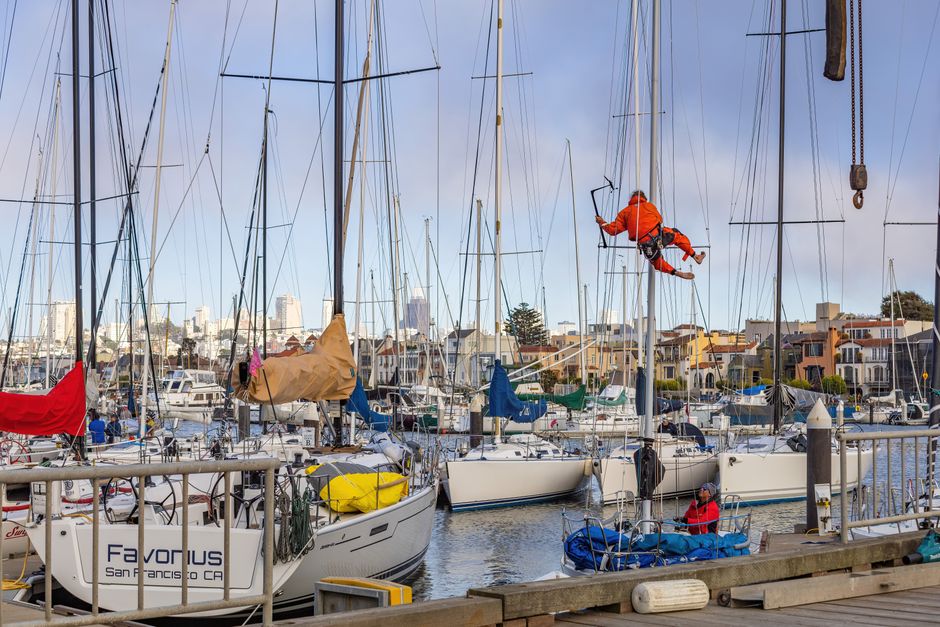
The marina manager has a list: three hulls to clean before a regatta, a row of pilings to inspect, a fuel dock fender to replace and a dive team coming Thursday. All of it happens at the waterline. The question on her desk isn’t “which platform is coolest” but “how do we get people and gear onto the water safely, and who do we buy it from?” That’s what a heavy duty floating platform is for, and this page starts where a business starts: with the job.
In short: describe the job first (who stands on the platform, what equipment goes with them, where and how often), then ask suppliers of engineered work platforms for a documented load rating, operating limits, anchoring instructions and commercial support. Recreational docks are not heavy-duty work platforms, whatever their advertised capacity.
Start with the job, not the platform
Suppliers can only match a product to a job they understand. Use this table to turn your work into a brief. The right-hand column is what to tell the supplier, not a promise about any product.
| Job | Who and what is on the deck | Tell the supplier |
|---|---|---|
| Hull cleaning, polishing, painting | 1–3 people, buckets, polishers, small tools | Hull types, working beside a moored boat, wake exposure, freshwater or salt |
| Dock, piling and seawall inspection | Inspectors, cameras, notes; moves along a structure | Length of structure, current, how often it moves, tie-up points |
| Dive support | Divers entering and exiting, tanks, gear | Number of divers, tank weight, entry and exit needs |
| Fender, ladder and dock-hardware repairs | Workers, hardware, power tools | Tool weights, power source, whether anything heavy is lifted from the deck |
| Marine construction (cranes, pile driving, dredging) | Heavy machinery and materials | Equipment specs and project details; this is engineered barge territory, scoped per project |
The first four jobs are typical of inflatable work floats such as the Talamex Air-Dock Work, which its retailers list for cleaning, polishing, painting and waxing alongside boats, and the AERÉ inflatable work platform, which its dealer lists for hull cleaning, inspections, repairs and diving support. The last row belongs to modular barge systems like Flexifloat, whose maker lists crane platforms, pile driving, dredge barges and floating bridges. For what each type is and how it’s built, see floating work platforms.
Who buys a heavy duty floating platform
- Marinas and yacht clubs, for maintenance of docks, pilings and moorings (more on marinas).
- Boatyards, detailers and yacht crews, for hull work from the water.
- Dive and inspection services, for a stable base at the work site.
- Resorts and rental operators, for maintaining their own guest platforms and moorings (see resorts and rental operators).
- Marine contractors and public works, who usually need engineered barge systems scoped for each project.
The five questions a business should ask
1. Liability: what does the paperwork say?
Your insurer, your clients and your own safety lead will want to know what the platform is rated for and that you’re using it within that rating. Ask for the written load rating (persons and equipment, with conditions), the owner’s manual and the warranty for commercial use. If something can’t be put in writing, assume it isn’t promised.
2. Safety: which rules apply to the crew?
For employees working over or near water, OSHA’s 29 CFR 1926.106 calls for U.S. Coast Guard-approved life jackets or buoyant work vests where there’s a danger of drowning (inspected before and after each use), ring buoys with at least 90 feet of line no more than 200 feet apart, and at least one lifesaving skiff immediately available. Ask your safety advisor which standards apply to your specific work and location, and plan the platform setup around them.
3. Durability: will it survive our work?
Tools, grit, paint and hull contact are hard on any surface. Ask what the deck and chambers are made of, how seams are built, whether a single punctured chamber keeps the platform afloat (for example, AERÉ’s dealer lists dual air chambers), and what the warranty excludes. Ask other operators in your area what has held up for them. Ask, too, what the warranty says about chemicals, dragging and storage: Aquaglide, for example, excludes all three on its inflatables, and paint and solvents are part of daily work.
4. Return on investment: buy, rent or hire?
There’s no average we can honestly quote here. Compare three options with your own numbers: buying a work float you use often; renting or leasing equipment for occasional or large jobs; and hiring a contractor who brings their own platform. Count the purchase, the staff time to inflate, anchor and pack it, repairs, storage and the jobs you can take on (or stop outsourcing) because you have it. Renting is a real option at the heavy end: Flexifloat, for example, offers its sectional barges both for sale and for rent, with its engineers helping on each project.
5. Supplier support: who answers when it fails?
Ask about spare parts, repair service, field-repair instructions, lead times and training for your crew. A supplier who explains anchoring, ballast and operating limits before the sale is likely to help after it. Resorts and rental operators who also run guest platforms can often use the same supplier conversation; see resorts and hotels and commercial recreation platforms.
What to send a supplier in your first email
- The jobs (from the table above) and how often you do each.
- The most people and the heaviest equipment you expect on the deck at once.
- The site: freshwater or salt, typical wind, wake and current, depth, what you tie up to.
- How you’ll move and store it, and who will inflate and anchor it.
- The documents you need back: load rating and how it was set, manual, warranty for commercial use, standards or engineering, anchoring plan.
Why a recreational dock is not a work platform
A swim dock rated for “10 adults” is rated for people relaxing, by a maker that designed it for that. RAVE, for instance, warrants its Aqua Dock for personal use, and Aquaglide gives its lakefront products a shorter warranty under light commercial use than under residential use. None of that tells you how a deck behaves with a crew at one edge and a compressor in the middle. Don’t infer work suitability from consumer specs; buy from a supplier who documents work loads.
A week of work access at one marina: a practical scenario
Back to the marina manager and her list. Here is how the week could run with one compact inflatable work float and a clear routine. The details are an illustration, not a rule; your platform’s manual and your safety advisor set the real limits.
- Monday, hull cleaning. Two staff inflate the float on the dock to the pressure in its manual, launch it, fill the ballast bags and tie it to the boat with fenders between float and hull. Buckets and polishers stay in the middle of the deck. Both wear life jackets; a ring buoy hangs on the nearest piling.
- Tuesday, piling inspection. The float is walked along the pier on lines rather than anchored, so the inspector can stop at each piling. Wakes from passing boats are the main hazard, so the crew watches the fairway and pauses when traffic builds.
- Wednesday, fender replacement. The new fenders and tools come out in a small batch, not all at once, keeping the deck well under the persons and load the maker states.
- Thursday, dive support. The dive team asks whether tanks and divers climbing out fit within the platform’s rating. If the written rating doesn’t cover it, they use their own boat or hire a dive platform.
- Friday, care. Rinse, check seams and valves, log any damage, dry and store out of the sun.
If the same week included lifting a gangway section or driving a new piling, the answer changes completely: that’s work for an engineered barge or a marine contractor, scoped for the job.
Before every job: a work access checklist
- The job, the crew and the heaviest equipment are within the platform’s written rating (persons and load).
- Pressure checked with a gauge against the manual; ballast bags filled if the platform has them.
- Deck, seams, valves and D-rings inspected; damage logged and repaired before use.
- Tie-off or anchoring planned as the maker shows; fenders between platform and hull.
- Life jackets or buoyant work vests inspected and worn; ring buoy and rescue boat available as the rules require.
- Weather, wakes and current checked against the platform’s operating limits; a clear “stop work” rule.
- Tools tethered or kept central; nothing heavy stacked at one edge.
- Someone on the dock knows who is on the water and when they are due back.
Many of these points match the ones in our general inflatable platform safety checklist, and the tie-off and anchor basics are in how to anchor an inflatable platform.
Inflatable, rigid modular or barge?
Choose by how the work moves. An inflatable work float travels to the job in a bag and suits hull work and inspections that change place every day. A rigid modular platform suits a fixed work area that stays out all season; Candock, for example, lists work platforms and equipment staging among the uses of its polyethylene cubes, and EZ Dock says companies use its docks for floating pumping stations and equipment and material barges. Heavy machinery goes on engineered barges. Our comparison of inflatable vs rigid floating docks and the modular platforms page explain the trade-offs in more depth.
Talk to us
Planning work access for a marina, boatyard, resort or project? Send us a business inquiry with the job, the site and what you need on the deck, and we’ll point you in the right direction.
Heavy-duty work platform questions
What is a heavy duty floating platform used for?
Work access on the water: hull cleaning and painting, inspection of docks and pilings, diving support and repairs. At the largest scale, modular barge systems carry cranes and construction equipment.
How do I know how much it can carry?
From the maker’s written rating, with its conditions. The Talamex Air-Dock Work, for example, is listed at a maximum of 700 kg and 5 persons. Don’t work it out from size.
Do workers on a floating platform need life jackets?
Under OSHA 29 CFR 1926.106, employees working over or near water where there’s a danger of drowning are provided U.S. Coast Guard-approved life jackets or buoyant work vests. Check which rules apply to your work.
Should we buy or rent a work platform?
Buy if you do the work often and can store and maintain it; rent or hire a contractor for occasional or very large jobs. Run the comparison with your own costs and job list.
Can a big inflatable swim dock do the job?
Its maker rated it for recreation, and many consumer warranties limit business use. Use a platform its supplier documents for work.
What should we check before each job?
That the crew and equipment fit the written rating, pressure and ballast are right, the deck and fittings are sound, life jackets are worn, rescue gear is at hand and the weather is within the platform’s limits. The checklist above is a starting point.
Can a work platform be left in the water between jobs?
Follow the maker’s manual. Inflatable work floats are usually rinsed, dried and stored after use; rigid modular platforms are built to stay out for the season. A platform that stays moored in US navigable waters may also need permits, so ask your Army Corps of Engineers district.
Keep exploring
For what a work platform is and how it’s built, read floating work platforms. Other business pages on the commercial hub cover marinas and rental and tour operators; the commercial and heavy-duty section collects the rest, and Start here covers the basics.