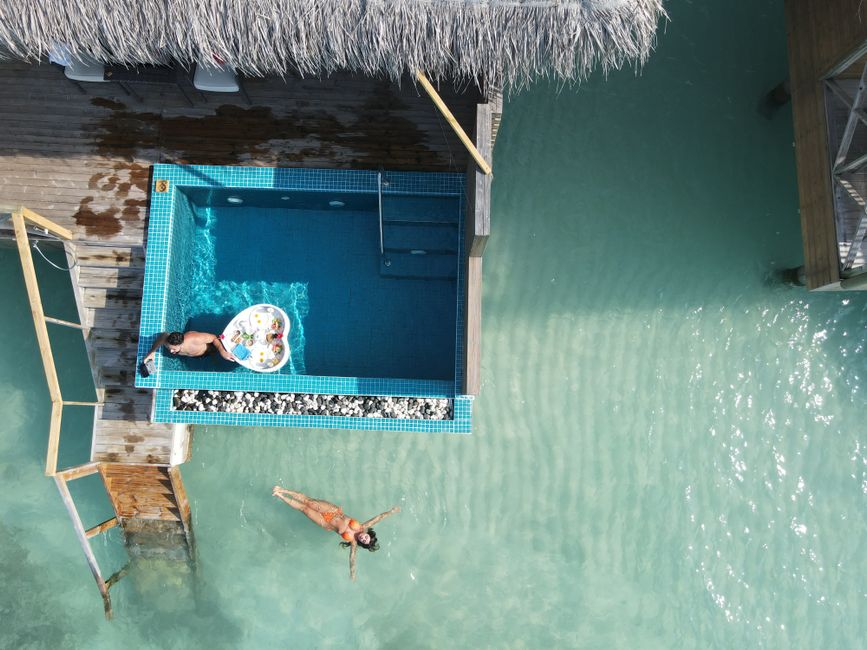
It’s ten in the morning at the beach club. The loungers are filling up, a family is already asking the front desk what there is to do “out there”, and a couple at breakfast keeps looking at the calm water past the swim line. A floating platform for resorts turns that view into a place: somewhere guests swim out to, sunbathe on, jump from and photograph. For the hotel it is also a piece of equipment that has to welcome dozens of strangers a day, every day, without a single bad story. This page starts from the two questions every general manager asks: what will our guests actually do on it, and what does it mean for our liability?
In short: resorts use floating platforms as swim-out decks, lounging islands, protected sea pools and full inflatable water parks. Choose the guest experience first, then buy equipment the manufacturer supports for commercial use (warranty, certification, anchoring plan), and settle supervision, insurance and local permits before opening day.
What guests do on a floating platform for resorts
Guests don’t ask for “a platform”. They ask for a morning swim with a goal, a quiet place to lie in the sun away from the pool noise, a safe splash for the kids, or a sunset drink on the water. Each of those is a different product, with a different level of supervision behind it.
| Guest experience | Platform that serves it | Who it pleases most | What it asks of your team |
|---|---|---|---|
| A swim-out destination | A firm, anchored deck (inflatable drop-stitch or rigid modular) | Adult swimmers, couples | Anchoring, daily inspection, a clear swim area |
| Lounging and sunbathing on the water | Floating lounge or a deck with lounge seating | Couples, adults-only areas | Shade and hydration plans, wind limits |
| Kids walking on water | Foam floating mat close to shore | Families | Close supervision, shallow-to-deep boundaries |
| A protected swim away from jellyfish and boats | Netted sea pool attached to a pontoon or dock | Families, nervous swimmers | Net checks, entry and exit control |
| A headline attraction | A commercial inflatable water park (aquapark) | Teens, groups, day guests | Trained staff, timed sessions, life jackets, operator manual |
| Private events and sunset drinks | Large modular deck | Weddings, VIP groups | Event rules, capacity per the maker, lighting, access by boat or walkway |
Start with one experience your guests already ask for. A boutique hotel on a quiet lagoon may only need a swim-out deck and a mat; a large resort on a beach with day visitors may plan a full water park. The platform types guide explains each option, and sea pools and floating lounges have their own pages, as do floating mats for the children. If you are still deciding what guests would enjoy, our fun and recreation page shows what people actually do on platforms.
Liability: settle these before the first guest steps on
We are not lawyers or insurers, and liability depends on your country, state and policy. What we can do is list the questions that come up in every serious project, so the conversation with your insurer and your supplier starts in the right place.
- Is the product meant for commercial use? Many consumer platforms are warranted for personal use only. RAVE Sports, for example, lists a limited lifetime warranty for personal use on its Aqua Dock, and its warranty policy says heavy commercial use is covered by a separate warranty assessed case by case. Ask your supplier in writing what applies to guest use.
- Which standard does it meet? The US standard for land inflatables (ASTM F2374) explicitly excludes inflatables designed to float on bodies of water. Commercial aquapark makers usually cite floating-leisure standards instead; Aquaglide, for example, says its products meet EN 15649 / ISO 25649 and are third-party certified. Aquaglide itself encourages buyers to ask any supplier for proof of compliance. Ask for the certificate, not just the claim.
- What does the maker say about capacity and depth? Use only the manufacturer’s stated numbers for people, weight and minimum water depth, and post them. Never estimate capacity from size.
- Who supervises? Decide whether the platform sits inside a lifeguarded swim area, and when it is closed (wind, storms, after dark). Your insurer and local rules will shape this.
- Life jackets. The US Coast Guard’s advice is simple: the best life jacket is the one you will wear. Many operators require them on water parks and offer them at every swim-out platform.
- Rules guests can read. Posted rules at the shore and on the platform: maker capacity, no diving where depth is shallow, children with an adult, closing conditions.
An inflatable water park for resorts: when it makes sense
An inflatable water park is a set of connected floating modules (slides, climbing towers, balance beams, jumping pillows) moored as one course. It is the biggest guest draw a waterfront resort can add and also the biggest operational commitment. Commercial suppliers sell it as a system: Aquaglide, for example, describes complete mooring systems with diagrams for each feature, stainless hardware, a three-year warranty on its commercial products and fabric built for commercial use. That is the level of documentation to expect. Aquaglide also says correct mooring is critical and that improper mooring can cause excessive wear and be dangerous, and it suggests judging an aquapark over three to five years rather than on purchase price alone. A modular park can also start small: some makers design hub pieces that let you add features as demand grows (more on modular platforms).
It makes sense when you have sheltered water of the right depth, a beach or dock for controlled entry, staff for every open session and enough guests (or paying day visitors) to keep it busy. If you are not there yet, a swim-out deck and a mat give guests most of the fun with far less staffing. The commercial recreation platforms page compares the product side in more detail.
Placement, anchoring and permits
- Anchoring is part of the product. Follow the maker’s anchoring plan and anchor points. Commercial suppliers provide mooring layouts; for consumer platforms, read the manual and our anchoring guide.
- Federal permits may apply in the US. The Army Corps of Engineers regulates structures in navigable waters, and its definition of “structure” includes docks, booms, artificial islands and permanent mooring structures. A platform that stays moored all season may need a permit; ask your Corps district and state agency.
- Swim-area buoys. Buoys that keep boats out of a swim area are information and regulatory marks: white with two orange bands, and an orange diamond with a cross means vessels are excluded. Private aids to navigation are applied for through the Coast Guard district on form CG-2554, and states and lake authorities often have their own buoy rules, so ask both.
- Weather. Write down when the platform closes and who brings guests in. A plan made on a calm day is the one that works on a windy one.
A daily routine your team can follow
Before opening: check pressure on every inflatable chamber against the maker’s figure (heat raises it, cool mornings lower it), walk the surface for wear or loose fittings, check anchor lines and connectors, and confirm the posted rules are in place. During the day: watch the number of guests against the maker’s rating and close when the wind picks up. At closing: rinse salt and sunscreen off if the maker recommends it, note any damage in a log, and repair small issues early. A written log is also the record your insurer will want to see. Commercial warranties often exclude dragging, sand inside, over-inflation from heat, improper cleaning and storage damage (Aquaglide lists all of these), so the routine protects your cover as well as your guests. Before the season ends, store everything clean, dry and protected from frost.
A first season at a small beach resort: a practical scenario
Picture a forty-room resort on a sheltered bay that wants “something on the water” for next summer. Here is one sensible way the year could go. It’s an illustration, not a formula; the numbers that matter come from your maker, insurer and local authority.
- Autumn: choose the experience. Guest reviews mention the calm water and families asking for things to do, so the team picks a swim-out deck inside the existing swim area, plus a foam mat close to shore for children. A water park is parked as a “maybe” for year three.
- Winter: paperwork first. The GM asks two suppliers for commercial warranty terms in writing, standards certificates, stated capacity and minimum depth, and an anchoring plan. The insurer reviews the shortlist, and the team asks the Army Corps district and the state whether a deck moored all season needs approval.
- Spring: set-up and training. The deck is moored as the maker’s plan shows, at the depth the maker requires. Staff practice inflation with a gauge, the daily check and the weather rule, and the posted rules go up on the beach and the deck.
- Summer: run it and log it. Morning checks, a lifeguard covering the swim area, life jackets on offer, the platform closed when the wind builds. Every scuff and repair goes in the log.
- Autumn again: decide with evidence. The log, guest feedback and repair costs show whether to add a floating lounge for the adults, a sea pool, or start planning that water park.
Opening-day checklist for a resort platform
- Commercial warranty terms, standards certificates and the owner’s manual on file.
- Insurer has approved the equipment, the supervision plan and the guest rules.
- Any federal, state or lake-authority approvals for the moored platform and swim-area buoys in hand.
- Platform moored to the maker’s plan, in at least the maker’s minimum depth, clear of boat traffic.
- Maker’s capacity, depth and closing conditions posted at the shore and on the platform.
- Lifeguard or supervision coverage set for opening hours; life jackets in guest sizes ready.
- Staff trained on inflation with a gauge, the daily inspection and the weather rule.
- Repair kit, spare parts and the maker’s repair instructions on site; a damage log started.
For the general guest-safety points, our inflatable platform safety checklist is a good companion to this list.
A private villa or owner’s beach
Not every property needs commercial equipment. A villa with a private beach that hosts one family at a time is closer to a home lakefront than to a beach club, and a residential inflatable dock or foam mat may suit it, as long as the maker’s warranty and your insurer accept guest use. Our guides on how to choose an inflatable platform and inflatable platform vs floating mat help with that decision. For a short list of personal picks, see BoatSlide’s best inflatable docks.
Resort platform questions
Can a resort use a consumer inflatable dock for guests?
Check with the maker first. Many consumer docks are warranted for personal use only, and commercial use may be covered differently or not at all. For daily guest use, choose equipment the manufacturer supports for commercial use and that your insurer accepts.
How many guests can be on a floating platform at once?
Only as many as the manufacturer states for that model, and fewer when conditions are rough. Post the maker’s figure where guests and staff can see it. Don’t work out a number from the platform’s size.
Do floating water parks need lifeguards?
Rules vary by state and country, and your insurer will have its own conditions. Commercial aquapark operators typically staff every open session. Ask your local authority and your insurer before you open.
Do we need a permit to moor a platform off our beach?
Possibly. In US navigable waters the Army Corps of Engineers regulates structures, including docks and artificial islands, and states and lake authorities add their own rules for docks and buoys. Ask before installing anything that stays moored.
What should we ask a commercial supplier?
Ask for the standards it is certified to (with certificates), the commercial warranty in writing, the stated capacity and minimum depth, the anchoring plan, the operator manual, staff training and how quickly they supply spare parts and repairs in season.
How deep must the water be under a resort platform?
At least the minimum depth the maker states for that model. As one example, RAVE lists 4 ft for its 10 x 10 ft Aqua Dock; commercial aquaparks come with site-specific mooring plans. Post the depth rule, and add your own no-diving rule where it’s shallow.
How do we mark a swim area around the platform?
With information and regulatory buoys (white with orange bands; a crossed diamond means boats keep out), approved as your Coast Guard district and state require. Ask both before placing them.
Planning a platform for your property?
Tell us about your hotel, resort or beach club: the water, the guests you host and the experience you have in mind. We’ll reply with the questions to ask and the kind of equipment to look at. Send a business inquiry.
Keep exploring
More for hotels and waterfront businesses: the commercial hub, platforms for marinas if the property has its own docks, and rental and tour operators if you run a watersports kiosk. The commercial and heavy-duty category collects everything for business, and Start here explains the basics.