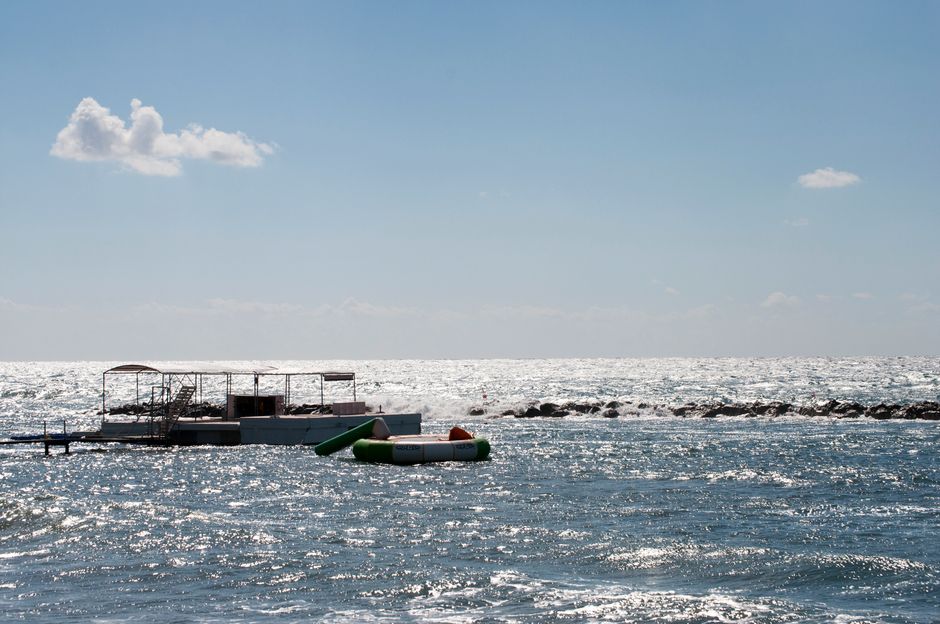
Picture the afternoon you’re buying it for. Maybe it’s the boat at anchor in a quiet cove, with everyone sliding off the stern onto something firm and warm. Maybe it’s the dock at the lake house, with cousins cannonballing until dinner. Or just two of you, a book and the sound of water. Knowing how to choose an inflatable platform starts there, because the right size, thickness and pump all follow from who will be on it and where. This guide walks through the decision in order, with a size table built only from what makers state.
In short: decide the use first (boat, dock or swimming spot), then pick a size whose maker-stated capacity comfortably covers your usual group, and a thickness of 6 in or more if adults will stand on it. Check the pump, the attachment points, the minimum water depth the maker asks for, the packed weight you can carry, and the warranty. A recreational platform’s rating is for leisure use only, never for work.
If you’re new to the subject, Start here explains what an inflatable platform is, and platform types shows every kind side by side. This guide assumes you know you want an air-filled platform and now need to pick the right one.
Step 1: Start with how you’ll use it
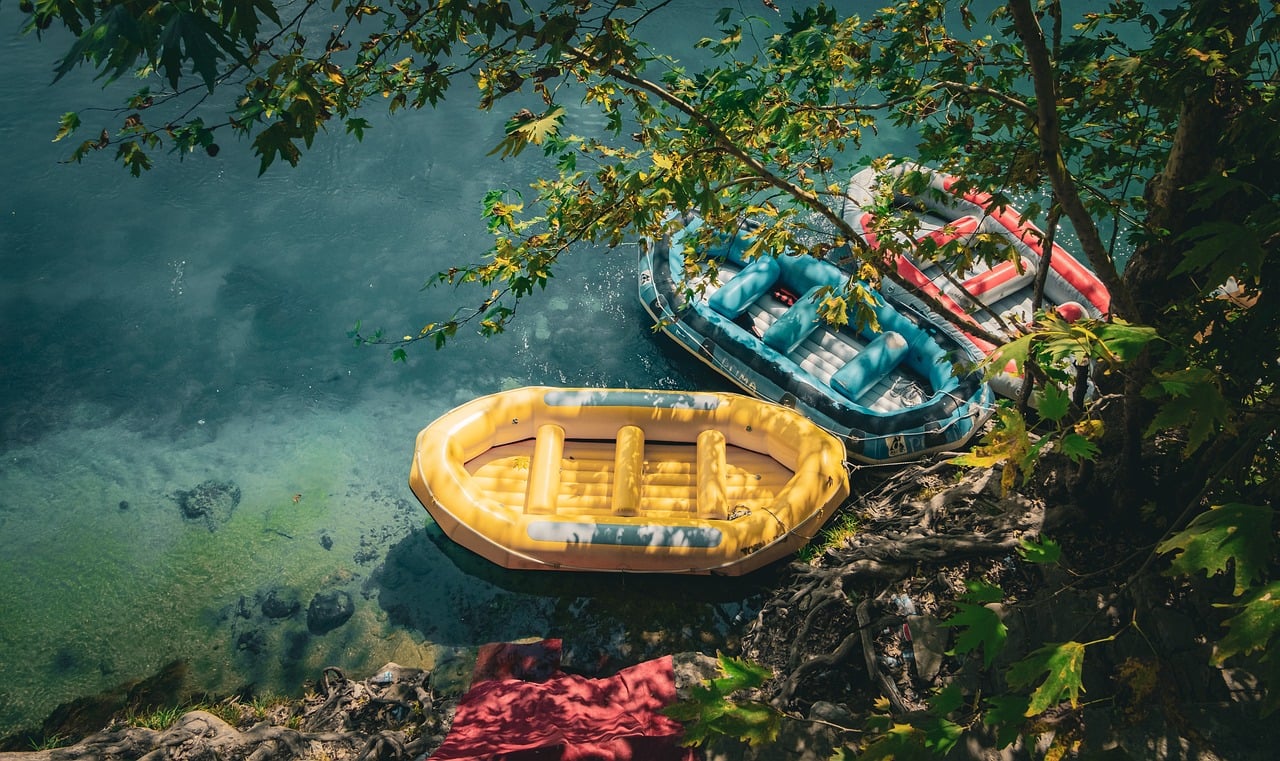
Most buying mistakes come from choosing by size or price before thinking about use. The three common uses pull in different directions:
- Off a boat. You’ll carry it aboard, inflate it on deck and stow it again, so weight and packed size matter most. Look for soft or bumpered edges that won’t mark the hull, and D-rings on the side you’ll tie off. Island Hopper, for example, lists rubber corner bumpers on its 10 x 6 ft dock and a packed size of 40 x 16 x 14 in. More in our boat swim platforms page.
- At a dock or lake house. It can be bigger and heavier because it may stay inflated for the day or the weekend. Anchor points, handles for climbing out and a firm deck matter more than pack size. See inflatable docks.
- Launching a kayak, SUP or jet ski. Then the question is the craft’s weight and how you get on and off, not how many friends fit. Read launch platforms and our guide to a floating dock for a jet ski.
- Mostly play and lounging. If it’s kids tumbling and adults lying in the sun, a long mat shape or even a foam mat may suit you better. Our inflatable platform vs floating mat comparison helps there.
One more use deserves its own line: work. Staging, inspection, construction access or any paid, repeated use needs an engineered platform with documented ratings from a supplier, not a recreational dock. A consumer platform’s advertised capacity does not make it suitable for work. Our commercial platforms page and the work platforms page explain what documents to ask a supplier for.
Step 2: What size inflatable platform do you need?
Size is where people overbuy or underbuy. The honest way to decide is to take the maker’s own rating for the model and compare it with your usual group, then add some breathing room. We don’t calculate capacity from dimensions; two platforms of the same size can be rated very differently depending on thickness and build. Here is what makers state for some common size classes (figures from the makers’ own pages):
| Size class and shape | Thickness | Maker-stated capacity | Deck weight | Figure stated by |
|---|---|---|---|---|
| Small square, about 7 x 7 ft | 8 in | 1,050 lb | 35 lb | BOTE |
| Boat-size rectangle, about 10 x 6 ft | 6 in | 1,500 lb | 53 lb | Island Hopper |
| Long mat, about 18 x 5 ft | 4 in | 1,500 lb, about 8 adults | 56 lb | RAVE |
| Large square, about 10 x 10 ft | 6 in | 1,800 lb, about 10 adults | 69 lb | RAVE |
| Large square, about 10 x 10 ft | 8 in | 2,100 lb | 83 lb | BOTE |
| Lounge-shaped deck, about 15 ft | 15 cm (about 6 in) | 8 adults, 1,600 lb | not stated | Aquaglide |
Read capacity as a ceiling for weight spread across the deck, not a number to aim for. Six adults gathered on one edge to watch a jump is a very different load from six lying spread out, and a platform tied to a boat also gets pulled by the lines and wake. Room matters as well as weight: lying down to sunbathe, setting a cooler on deck and climbing on and off all take space, so picture how your group will actually use it. If you’re unsure between two sizes, the bigger one gives more room to spread out, but check you can still carry it.
Notice the two 10 x 10 ft rows in the table: same footprint, different thickness, different rating. That’s exactly why a size alone tells you little. Always read the rating for the exact model and size you’re considering, and if a listing’s capacity doesn’t match the maker’s own page, trust the maker and ask them.
Step 3: Thickness and pressure
Inflatable platforms are made of drop-stitch fabric, which stays flat when pumped up (we explain how in what drop-stitch is). Thickness and pressure together decide how firm the deck feels. Long mats are often 4 in; many docks are 6 in; some makers, BOTE for example, build theirs 8 in thick. Thicker panels flex less when several people stand near one edge.
Makers set very different pressures: RAVE lists 5 psi for its dock and long mat, Aquaglide 3.5–5 psi for its lounge deck, BOTE 6–10 psi depending on size, and Island Hopper 8–15 psi for its 10 x 6 ft dock. Always use the maker’s number for your model, never a figure from another brand, and check it again on hot days. FUNBOY, which makes drop-stitch floats, warns that direct sun and heat can raise the pressure inside and recommends letting some air out if needed.
Step 4: Material, seams and finish
Product pages describe their build in different words, but a few things are worth looking for:
- Drop-stitch PVC with a stated layer or weight. Island Hopper describes heat-welded PVC with a reinforced 1000-denier fabric layer; Aquaglide lists 31 oz fabric with welded seams on its lounge deck. Vague wording with no details is a reason to ask questions.
- A non-slip top. EVA foam pads (Island Hopper) or foam corners (RAVE) give grip and keep the surface cooler to sit on.
- UV resistance. Platforms spend all day in the sun. Look for a maker’s UV claim and store it out of the sun when it’s not in use.
- Attachment points. Count D-rings and handles. RAVE, for instance, lists 8 D-rings, 10 neoprene-covered handles and 2 stainless anchor points on its 10 x 10 ft dock. Handles all around make climbing out of deep water much easier.
Step 5: Portability and the pump
Check the weight, not just the deck size. Makers list 69–83 lb for the 10 x 10 ft decks in the table, a two-person carry; the 35–56 lb sizes are easier to manage alone. Packed size matters on a boat: will it fit in a locker or under a seat?
Many platforms include a hand pump. It works, but a big deck takes effort, and makers’ times vary (Island Hopper says about 8 minutes for its 10 x 6 ft dock; RAVE says 5–10 minutes for its 18 ft mat). A 12V electric pump that plugs into a car or boat socket and stops at a set pressure is a popular upgrade. Check that its nozzles fit your platform’s valve and that it reaches the maker’s psi.
Step 6: Where it will sit: depth, anchoring, weather
- Depth. Makers state a minimum: RAVE asks for at least 4 ft under its platforms, and Aquaglide asks for 4.8 ft under its lounge deck plus 3.3 ft clearance from shore. Deep enough to float is not the same as deep enough to jump into.
- Anchoring. Use the maker’s anchor points and instructions. A lake-house lounge can need serious weight: Aquaglide calls for at least 4,400 lb of anchor weight for its large lounge deck. See how to anchor an inflatable platform, and for a dock that stays out at a pond or lake, floating docks for ponds and lakes.
- Weather. Wind turns a big flat platform into a sail. Bring it in before storms; the National Weather Service advises getting out of and away from lakes and ponds when thunderstorms approach.
- Life jackets. A platform is not a life-saving device. The U.S. Coast Guard urges everyone on the water to wear a USCG-approved life jacket that fits; keep kids in theirs and watch them at all times. Our safety checklist has more.
Step 7: Budget and warranty
On the makers’ own sites in October 2026, recreational drop-stitch platforms ran from several hundred dollars for a long mat or boat-size dock to around two thousand dollars for a large lounge deck. Thickness, size and extras (bumpers, foam pads, a lounge back) push the price up. Budget for a pump upgrade, an anchor kit and rope too if your platform doesn’t include them. Prices change often, so check current prices before you decide.
Warranty says a lot about how long a maker expects a platform to last. On the platforms in our table, RAVE states a limited lifetime warranty for personal use, Island Hopper five years if you register within 30 days, Aquaglide three years and BOTE two years. Read what’s covered (usually manufacturing defects, not punctures or sun damage) and whether you need to register.
A quick checklist before you buy
- Use: boat, dock or play?
- Maker-stated capacity comfortably above your usual group.
- 6 in or thicker if adults will stand and sit on it.
- D-rings, handles and anchor points where you need them.
- A weight you can carry and a packed size you can store.
- A pump plan, and the maker’s psi written down.
- The maker’s minimum depth and anchoring met where you’ll use it.
- Warranty length and registration rules.
Matching the platform to the plan: three examples
A 22 ft bowrider, a family of four, weekend coves. Storage is the limit, so a boat-size rectangle around 10 x 6 ft that rolls small makes sense, with bumpered edges and D-rings to tie off the stern. Check the maker’s rating covers four people plus a cooler, and plan where the rolled deck lives on board. The boating and yachts page has more on life at anchor.
A lake house with grandkids all summer. The platform can stay out for days, so a larger, thicker deck with many handles and proper anchor points fits, plus a clear plan for anchoring and bringing it in before storms. A foam mat alongside often keeps the youngest ones busy. See family lake days.
A couple who mostly want to float and read. Deck space matters less than comfort. A lounge-style deck or a floating lounge may suit better than a square dock.
Questions to ask the maker before you decide
- What is the rated capacity for this exact size, and is it in pounds, people or both?
- What psi, which valve type, and does a pump come with it?
- What minimum water depth and anchoring do you require?
- Can it stay inflated on the water for several days, and what do you advise in heat and sun?
- What does the warranty cover, for how long, and do I need to register?
- Is a repair kit included, and can you repair it if the seams fail?
For a short list of picks, see BoatSlide’s best inflatable docks. Browse all our guides for more.
Choosing an inflatable platform: questions
What size inflatable platform do I need for a family of four?
Check the maker’s rating for each model rather than going by square feet. The ratings we found run from 1,050 lb for a 7 x 7 ft deck to 2,100 lb for a thick 10 x 10 ft one. Choose one whose stated capacity sits well above your group’s total weight, with room for everyone to spread out.
How thick should an inflatable platform be?
Many docks are 6 in thick; some are 8 in. Thinner 4 in designs are usually long mats for lounging. If adults will stand, kneel and climb out on it, 6 in or more feels firmer.
Do I need an electric pump?
Not strictly, since many platforms include a hand pump, but a 12V electric pump with auto-off makes setup easier, especially on 10 x 10 ft decks or models that run above 8 psi.
Can I use a recreational platform for work or a business?
No. Consumer platforms are rated for leisure use. Work access and repeated commercial use call for engineered platforms with documented ratings from the supplier; see our commercial page.
How long do inflatable platforms last?
The makers we checked don’t state a lifespan, but warranties are a guide: from two years to a limited lifetime for personal use on the platforms in our table. Rinsing, drying and storing out of the sun all help.
Is an inflatable platform better than a rigid dock?
It depends on the job. Inflatables pack away and travel; rigid docks suit permanent, all-season use. Our inflatable vs rigid floating docks comparison goes through when each wins.
Should I buy one big platform or two smaller ones?
Two smaller decks are easier to carry and store, but only join them if the maker provides a way to connect them. If you want a layout that grows, look at modular platforms, which are designed to link.
Keep exploring
Compare the main types on inflatable docks and boat swim platforms, learn why thickness matters in what drop-stitch is, run through the safety checklist before your first day out, or head back to Start here.