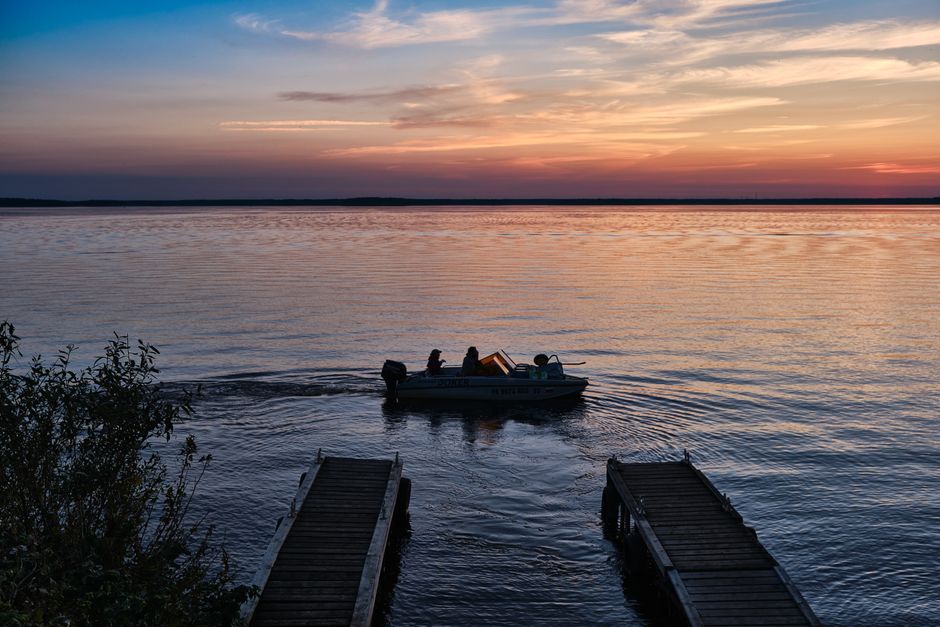
It starts with a small wish. You want somewhere to sit with your feet over the water at sunrise, a spot where the kids can cast a line without wading through mud, a place to jump from on a hot July afternoon. A floating dock for a pond or lake gives you exactly that: a flat, steady deck that rises and falls with the water instead of standing on posts. This guide explains the two main ways to get one (a floating dock kit you assemble, or an inflatable dock you pump up), how to tell which suits your water, the anchoring basics and the permits to check before anything goes in.
In short: for a dock that stays out all season at a pond or lake house, a floating dock kit (plastic float sections or float drums under a deck) is the usual choice. For something you can set up for the day, move or store in a garage, an inflatable dock is lighter and usually less expensive to start with. Either way, anchor it the way the maker says and check your state and local rules first.
If you’re new to the different kinds of floating platforms, our platform types guide gives the full picture; this article focuses on docks that live at a pond or lake.

Pond or lake: what changes
The same dock can feel very different on a quiet farm pond and on a busy lake, so start with the water, not the product.
- Ponds are usually small, sheltered and calm. There is little wind fetch and no boat wake, so a lighter dock stays steady. The catches: ponds are often shallow near the bank, the bottom can be soft mud, and the water level can drop a lot in a dry summer. A floating dock handles level changes far better than a fixed one, as long as its anchoring lets it move up and down.
- Lakes bring wind, chop and passing boats. A dock that is fine on a pond can bounce and tug at its anchors on a lake, so weight, thickness and solid anchoring matter more. Lakes also bring more rules: shared shorelines, navigation channels and, on some lakes, a utility or agency that manages the shoreline.
- Depth. Check how deep the water is where the dock will sit, at the lowest level you expect. Makers state minimums for some products: RAVE asks for at least 4 ft under its inflatable docks, and Aquaglide asks for at least 4.8 ft for one of its large anchored lounge decks. Jumping needs more depth than that, so keep diving off any dock out of the plan unless you know the water is deep enough.
- Winter. If your pond or lake freezes, plan to take the dock out. Connect-A-Dock, for example, says freezing will not harm its floats but recommends removing the dock for winter where ice shifts.
Floating dock kits vs inflatable docks
“Floating dock kit” covers two things. Some kits are complete systems of molded plastic float sections that lock together into a deck. Others are the parts to build your own: foam-filled float drums that bolt under a wood or aluminum frame you build or buy separately. An inflatable dock is different again: one drop-stitch PVC panel, often 6 in thick, that you pump up hard and tie down (our drop-stitch explainer shows why it stays flat). For a deeper look at the materials, see our inflatable vs rigid floating docks comparison.
| Option | What you get | Capacity, as makers state it (examples) | Suits | Typical cost |
|---|---|---|---|---|
| Plastic float-section kit | Molded sections that lock together, plus connectors, cleats and often a gangway hinge | Up to 690 lb per 60 x 45 in section (Connect-A-Dock 1000 Series) | Season-long pond or lake dock | Even a short starter kit can run to several thousand dollars |
| Float drums under your own frame | Foam-filled floats; you build or buy the frame and decking | About 335–1,200 lb flotation per float, by size (Taylor Made) | DIY builders, custom shapes | Priced per float, plus lumber, hardware and labor |
| Inflatable dock, large square (about 10 x 10 ft) | One drop-stitch deck, usually with a hand pump | 1,800 lb, up to 10 adults (RAVE) | Swimming and lounging, movable | From several hundred dollars up, at makers’ list prices |
| Inflatable dock, boat-size (about 10 x 6 ft) | One smaller drop-stitch deck, often with bumpers | 1,500 lb (Island Hopper) | Small ponds, boats, day use | From several hundred dollars up, at makers’ list prices |
Cost ranges are from makers’ and retailers’ listings checked in October 2026 and change often. Buoyancy and capacity figures are not the same thing as “how many people can safely stand on it.” Use the people count and weight limit the maker states for the finished dock, and for a DIY build, follow the float maker’s sizing guidance rather than adding up drum ratings yourself.
When a floating dock kit wins
Choose a kit when the dock will stay in from spring to fall, when you want to tie up a boat, canoe or kayak, or when you want to walk out from the bank to deeper water. Connected plastic sections like Connect-A-Dock’s 1000 Series sit with the walking surface about 8 in above the water, and the maker says each section supports up to 690 lb. Kits usually include connectors and fittings for pipe anchoring, but the pipe for the pilings may not be in the box, so check and budget for it. Kits cost more up front, but there is nothing to pump and no seams to watch. If you want to grow the dock later, see how sections combine into L, T and square layouts on the modular platforms page.
When a DIY float-drum build wins
If you are handy and want a particular size or shape, float drums under your own frame are the most flexible route. Taylor Made, for example, makes its dock floats with a UV-resistant polyethylene shell filled with EPS foam and lists approximate flotation by size: 450 lb for a 24 x 48 x 12 in float and 600 lb for the 16 in tall version, up to 1,200 lb for its largest, with an 8-year flotation warranty. Lower floats suit a deck that sits close to the water but carry less each, so you need more of them. The maker also notes its floats are not designed to attach to each other; the frame holds everything together. You will also need a frame, decking, hardware and an anchoring plan, and the result is only as good as the build, so follow the float maker’s instructions closely.
When an inflatable dock wins
Choose inflatable when you want a swim platform out in the pond rather than a walkway from the bank, when you rent or might move, or when you need to pack it away after the weekend. A 10 x 10 ft inflatable gives 100 sq ft of deck; RAVE rates its dock of that size for 1,800 lb, or up to 10 adults or 14 children, and gives it two stainless steel anchor points. A boat-size 10 x 6 ft deck is lighter to carry (Island Hopper lists 53 lb for its own and rates it for 1,500 lb). Many come with a hand pump. They are softer underfoot than a hard dock and they need air checks, but they roll up for the winter. See more on the inflatable docks page.
Getting from the bank to the dock
On a pond, the trickiest part is often the first few feet: soft mud, reeds and a bank that drops off. Section kits and DIY docks often connect to shore with a hinged gangway or ramp, so the dock can rise and fall while the walkway pivots. An inflatable dock more often sits out in the water as a swim deck than joined to the bank, and people swim or paddle out to it. If you want an easy way to launch a kayak or paddle board from the dock, look at launch platforms, which add a low entry point.
For a short list of inflatable picks, see BoatSlide’s best inflatable docks.
Anchoring basics
A floating dock must stay put sideways while still moving up and down with the water. How you do that depends on the dock and the bottom, and the maker’s instructions come first.
- Pipe pilings are common for section docks near the bank. Section docks use pole anchoring connectors made for pipe driven into the bottom, so the dock slides up and down the pipe as the level changes.
- Weights and lines suit docks farther out and most inflatables. Tie only to the anchor points or D-rings the maker provides. One large Aquaglide lounge deck shows how much this can take for a big platform left out all summer: at least 4,400 lb of total anchor weight across four anchor rings, at least 4.8 ft of water and at least 3.3 ft from shore.
- Leave slack for level changes. On a pond that drops in summer, a tight line can pull a dock down at one corner. Check lines after storms and dry spells.
- Use corrosion-resistant hardware. Connect-A-Dock recommends stainless steel or other non-corrosive materials for anchoring.
Our step-by-step guide on how to anchor an inflatable platform covers anchor types, rope and scope in more detail.
Permits: check before you build
Rules depend on where the water is and who manages it, so treat this as a list of who to ask, not legal advice.
- Federal: on navigable waters of the United States, the U.S. Army Corps of Engineers requires a permit under Section 10 of the Rivers and Harbors Act for structures, and its rules list boat docks and permanent mooring structures as structures. Many small private docks are covered by general permits, but you need to confirm that with your Corps district.
- State: each state sets its own rules. Minnesota is a clear example: the DNR says no permit is needed for a dock on shoreline you own if, among other conditions, it is no more than 8 ft wide, no longer than needed to reach usable depth, not a hazard to navigation, lets water flow freely underneath, and follows local government guidelines.
- Local: counties, towns, lake associations and HOAs often add their own rules on size, placement and swim rafts, and some lakes are managed by a utility or agency with a shoreline permit of its own.
- Private ponds: a pond entirely on your land often has the fewest rules, but check with your county or state anyway, especially if a stream flows through it.
Safety on a pond or lake dock
Docks make swimming feel easy, which is part of the danger. The U.S. Coast Guard points out that most boating-related drownings happen on nice days, that adult life jackets may not work for children, and that child-size life jackets are available. Keep a properly fitted, Coast Guard approved life jacket on young children and weak swimmers, stay within the maker’s stated capacity, and keep someone watching the water whenever kids are swimming. Our inflatable platform safety checklist covers weather, inspection and kids in more detail.
Care through the season
- After storms and dry spells: check anchor lines, pipe fittings and connectors, and re-level the dock if one corner sits low.
- Inflatables: check the pressure against the maker’s psi, especially on hot days, and rinse off algae and grit so they don’t wear the surface.
- Wood decks: look for loose boards and fasteners, and keep floats sitting level under the frame.
- End of season: lift out where ice will shift, or follow your maker’s winter advice; clean, dry and store inflatables out of the sun.
How to choose, in five steps
- Measure the depth where the dock will sit, at the lowest water level you expect.
- Decide on its job: a walkway from the bank and boat tie-up (kit), or a swim and sun deck out in the water (inflatable or a free-floating kit dock).
- Check the rules with your state, county and lake association.
- Plan the anchoring before you buy, including pipe, weights or lines not in the box.
- Plan for winter: where it goes, and whether you can lift it out.
If you’ve settled on an inflatable, how to choose an inflatable platform goes through size and the maker’s rating in more detail. For what you’ll do once it’s in, see our pages on fishing platforms and family lake days.
Pond and lake dock questions
What is the best floating dock for a small pond?
For a dock that stays out all season, a short floating dock kit or a small DIY deck on float drums is the usual choice. For a swim deck you can take in after the weekend, a 10 x 6 ft or 10 x 10 ft inflatable dock works well on calm water. Check the depth first; some makers state a minimum, such as RAVE’s 4 ft for its inflatable docks.
Do I need a permit for a floating dock on my pond?
It depends on the state, the county and whether the water counts as navigable or public. A pond fully on your land often needs little, but rules vary, so check with your state natural resources agency and county before you build.
How much weight does a dock float hold?
Each float has a buoyancy rating from its maker; Taylor Made, for example, lists about 335 to 1,200 lb depending on size, with 600 lb for a 24 x 48 x 16 in float. Buoyancy is not the same as a safe load for people. Size your build with the float maker’s guidance.
Can I leave a floating dock in over winter?
Where the water freezes, makers generally advise taking it out. Connect-A-Dock says its floats are not harmed by freezing but recommends removal where ice shifts. Inflatable docks are generally cleaned, dried, deflated and stored out of the sun; follow the maker’s instructions.
Is an inflatable dock stable enough for a lake?
On calm days, a drop-stitch dock inflated to the maker’s pressure is firm enough to stand, sit and climb onto. Wind and boat wakes make any inflatable move more than a heavy kit dock, so anchor it at the maker’s points and bring it in when storms are coming.
Would a floating mat work instead of a dock on a pond?
For play, yes, as long as the water is deep enough for the maker’s minimum. A foam mat flexes and isn’t something to tie a boat to or set a chair on. Our inflatable platform vs floating mat guide compares the two.
Can I tie a jet ski to a pond or lake dock?
You can tie one alongside a sturdy dock, but if the jet ski lives on the water, a drive-on port is the usual answer. See floating dock for a jet ski.
Keep exploring
Weigh the materials in inflatable vs rigid floating docks, read more about inflatable docks, browse the inflatable docks and uses categories, or go back to Start here.