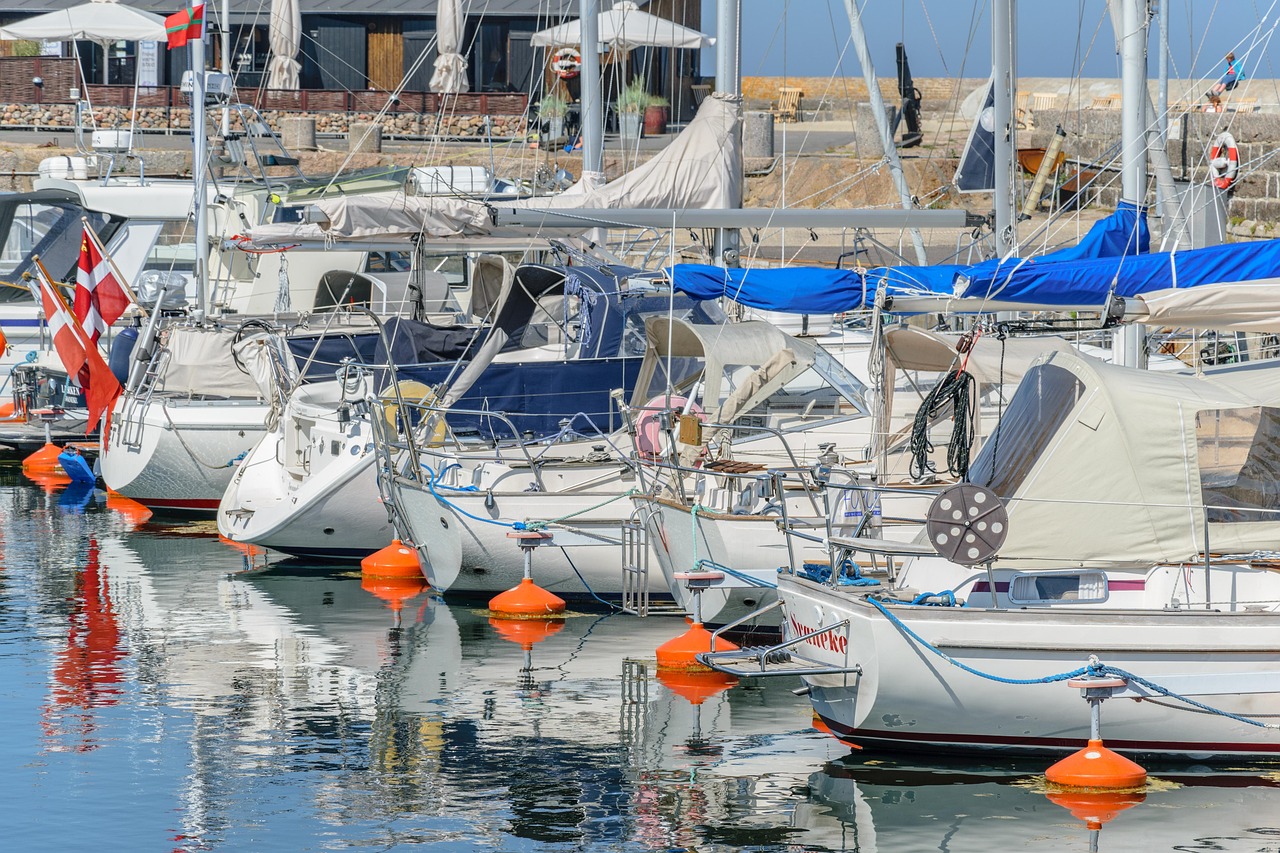
Early morning in the marina, before the guests are up. Two deckhands kneel on a long grey platform tied alongside the hull, one working polish into the topsides, the other wiping a waterline stain with a bucket and sponge between them. The platform barely moves as they shift their weight. A yacht maintenance platform gives crew a stable floor at the waterline without lowering a tender or rigging staging, and when the job is done it deflates back into a bag. This page covers the inflatable platforms sold for hull cleaning and maintenance, how they differ from leisure decks, and the very different platforms used to inspect the inside of tanks.
In short: for hull cleaning, polishing and antifouling touch-ups, crews use thick drop-stitch work platforms with ballast and non-slip decks, such as NautiBuoy’s maintenance raft, SeaRaft’s maintenance platforms, VersiFloat and FunAir’s work platform. Loads are as each maker states them (for example 300 kg for FunAir’s 3 x 1.5 m platform, 2,149 lb for VersiFloat’s 5 x 10 ft). Inspection platforms from Buitink are a separate product that clamps inside industrial tanks, not on open water.
What crews use a hull cleaning platform for
Makers and retailers list the same jobs again and again: cleaning the waterline, polishing and waxing topsides, touching up antifouling and paint near the waterline, checking fittings and through-hulls from the outside, and giving divers a place to stage gear. The common thread is low, close work that’s awkward from the deck and unsteady from a tender. A flat platform tied alongside puts the crew at the right height with their tools beside them.
Not every inflatable deck is suited to this. A leisure platform is rated and warranted for people relaxing; a crew with buckets, polishers and paint is a different load, and some products are built for it. Our work platforms page explains the difference in detail, and heavy-duty work access covers what a business should ask a supplier.
Yacht maintenance platforms on the market
| Product | Published size and build | Load as stated | How sold |
|---|---|---|---|
| FunAir work platform | 300 x 150 x 40 cm (9.8 x 4.9 ft); 0.9 mm 1000-denier PVC, fire-retardant and UV rated | 300 kg | Quote |
| VersiFloat 5 x 10 ft | Drop-stitch PVC at 15 psi; Velcro non-skid boards; stainless D-rings; repair kit; wheeled case | 2,149 lb | Not published |
| VersiFloat 6 x 12 ft | As above | 3,306 lb | Not published |
| SeaRaft PL375 to PL800 | 2.5 x 1.5 to 4 x 2 m; underside ballast; teak or diamond finish; called “Yacht (Maintenance) Platforms” by the maker | Not published | Retailers |
| NautiBuoy maintenance raft and pack | Part of the NautiBuoy system (20 cm drop-stitch, water ballast) | See the platform used | Resellers |
A few build details matter more for work than for leisure. Ballast bags under the platform (SeaRaft, NautiBuoy) stop it rocking as crew move along the edge. A textured or non-skid top (VersiFloat’s Velcro-attached boards, SeaRaft’s diamond finish) holds a wet knee. Fire-retardant and UV-rated fabric, as FunAir lists for its work platform, suits a deck that sits in the sun next to solvents and polish. FunAir’s platform is also 40 cm thick, twice the 20 cm of most yacht leisure platforms.
Buitink inflatable tank work platform
by Buitink Technology
- Size (as stated): 3 m example: 34 cm high; sizes S to XXXL (up to about 30 m diameter, project-specific)
- Stated capacity: 3 m example: about 1,000 kg at 350 mbar; size S: 200 to 500 kg
FunAir work platform
by FunAir
- Size (as stated): 300 x 150 x 40 cm
- Stated capacity: 300 kg
- Thickness: 40 cm
SeaRaft PL525 platform
by SeaRaft
- Size (as stated): 3.5 x 1.5 m
- Thickness: 20 cm drop-stitch (retailer)
VersiFloat 5 x 10 ft
by VersiFloat
- Size (as stated): 5 x 10 ft
- Stated capacity: 2,149 lb
VersiFloat 6 x 12 ft
by VersiFloat
- Size (as stated): 6 x 12 ft
- Stated capacity: 3,306 lb
Setting up for a hull job
- Check the conditions. Sheltered water and a calm marina. Any wake from passing boats will move the platform against the hull.
- Inflate to the maker’s pressure with a gauge. VersiFloat states 15 psi; other makers state their own.
- Fill the ballast if the platform has it, before anyone steps on.
- Tie fore and aft to the yacht’s cleats with fenders or the platform’s own soft edge between platform and hull.
- Load within the stated limit: crew plus tools, buckets and materials.
- Keep chemicals contained. Use trays and lids so polish, solvent and antifouling don’t reach the water or the platform’s skin. Check local marina rules on in-water hull work.
- Rinse, dry and cover the platform afterwards. SeaRaft and NautiBuoy sell purpose-made covers for platforms that stay inflated.
For crews working as employees in the U.S., OSHA’s rule for work over or near water (29 CFR 1926.106, part of the construction standards) calls for Coast Guard approved life jackets or buoyant work vests, ring buoys with line, and a lifesaving skiff available. Whether it applies to your job is a question for your safety lead, but it’s a good baseline either way.
Inspection platforms inside tanks: a different product
Searches for “inspection platform” also turn up Buitink Technology, a Dutch maker whose inflatable work platforms don’t float on open water at all. They’re placed inside industrial tanks and pressure vessels and clamp against the inside wall by air pressure, giving inspectors and repair crews a floor to stand on. Buitink gives a 3 m example that’s 34 cm high, weighs 33 kg and carries about 1,000 kg at 350 mbar internal pressure; its smallest size S is rated 200 to 500 kg, and its largest are project-specific, up to about 30 m in diameter. Buitink says the platforms are CE-certified but doesn’t name the standards. A 20 m version exists only as an engineering calculation: Buitink built a 3 m proof of concept.
We found no dedicated inflatable product for inspecting bridges or dams from open water. Crews doing that work use boats, barges or rigid pontoons. If a product appears, we’ll add it once its maker documents it.
Before you ask for a quote
- The yacht’s length and freeboard, and where the platform will tie on.
- The heaviest load you expect: crew, tools and materials together.
- The maker’s rated working load in writing, and any certification it holds.
- Packed size and weight against your storage space, and how it inflates.
- Whether it can double as a guest swim platform (several yacht platforms do both) and whether the warranty covers work use.
Most of these platforms are sold by quote or through yacht resellers. We don’t sell them; to reach a maker or compare published specs, use Request more information.
Hull maintenance platform questions
Can I use my yacht’s swim platform for hull cleaning?
Some yacht platforms are sold for both: SeaRaft calls its range “Yacht (Maintenance) Platforms”, and NautiBuoy sells a maintenance raft and pack within its system. Check that the maker’s rating and warranty cover crew and tools, not just guests.
How much weight can a hull cleaning platform carry?
As stated by the maker: 300 kg for FunAir’s 3 x 1.5 m work platform, 2,149 lb and 3,306 lb for VersiFloat’s two sizes. SeaRaft doesn’t publish a figure for its PL525.
Are there inflatable platforms for tank inspection?
Yes, from Buitink Technology. They clamp inside tanks and pressure vessels by air pressure and are not for open water.
Are work platforms thicker than lounge decks?
Often. FunAir’s work platform is 40 cm thick; most yacht leisure platforms are 20 cm and lake decks about 15 cm. In drop-stitch, thickness is set by the length of the internal threads; what is drop-stitch explains how it works.
Keep exploring: all uses on Explore by Use, the guest side of the same products on yacht platforms, the day at anchor on boating and yachts, and engineered products on work platforms.